 Luxury Wellness Thailand
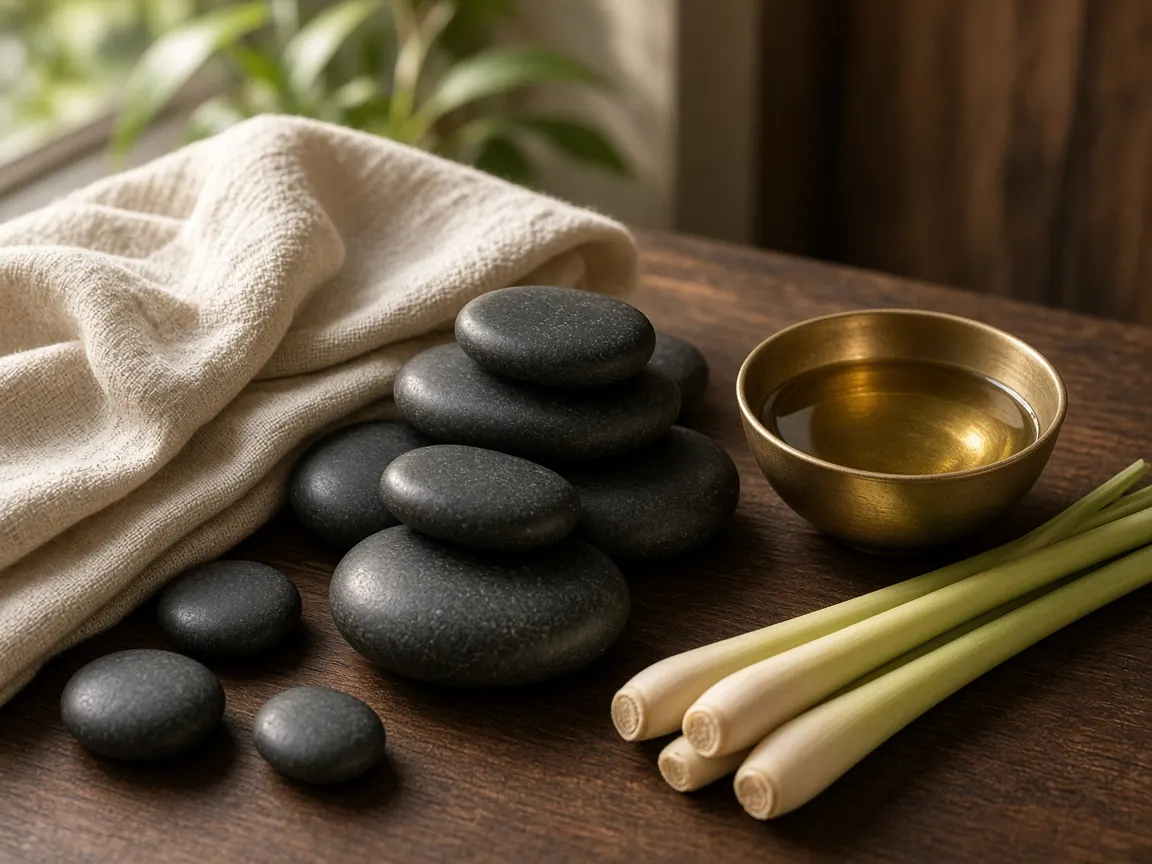
You open the spa menu, or the message from your private therapist, and there it is: the first decision of your afternoon. Thai massage or oil massage?
They sound like two versions of the same thing. They aren't. One moves you, stretches you and asks you to take part. The other asks nothing of you at all. Both are excellent in Bangkok, and both have real research behind them. The right choice depends on your body, your day and what you want to feel like when you stand up afterwards.
This guide walks you through the difference, so you can choose with confidence and spend the hour enjoying it rather than wondering whether you picked the wrong one.
Thai massage: you are moved
Traditional Thai massage, nuad thai, is the style Thailand is famous for. In 2019 UNESCO inscribed Nuad Thai on its Representative List of the Intangible Cultural Heritage of Humanity, recognising it as a living tradition handed down from teacher to student.
Here is what to expect:
- Where: a firm mat on the floor, not a table.
- What you wear: loose, comfortable clothes, usually a cotton top and trousers the spa or therapist provides. You stay fully dressed.
- No oil: the therapist works through your clothes.
- How it feels: rhythmic pressure from palms, thumbs, forearms, knees and feet along the body's energy lines, called sen, combined with assisted stretches. Your therapist may fold your legs, lift your arms and guide you into gentle twists you would never manage on your own.
- Afterwards: most people describe feeling longer, looser and surprisingly awake.
Thai massage suits you if you have spent hours on a plane, sit at a desk most of the year, feel stiff rather than sore, or simply want to experience the tradition at its source. For a fuller picture of a traditional session, read our guest's guide to Thai massage in Bangkok.
Oil massage: you are still
Oil massage is the style most visitors know from home. In Bangkok you will see it listed as oil massage, aromatherapy massage or Swedish massage, and often in signature treatments that blend Thai techniques with warm oil.
What to expect:
- Where: a padded massage table, or a firm bed if your therapist comes to you.
- What you wear: you undress to your comfort level and are covered with a towel or sheet the whole time. Only the area being worked on is uncovered.
- Oil: warm oil, sometimes scented with essential oils, lets the therapist's hands glide.
- How it feels: long, flowing strokes, kneading and slow pressure. You don't move; the therapist moves around you.
- Afterwards: heavy, warm and calm. Many guests fall asleep on the table.
Oil massage suits you if you feel tired or overstimulated, want to sleep well tonight, have sore rather than stiff muscles, or simply prefer not to be stretched.
What the research says
Here's the reassuring part: you are not choosing between a treatment that works and one that doesn't.
For back pain, they come out even. In a 2005 trial in the Journal of Bodywork and Movement Therapies, Uraiwan Chatchawan and colleagues compared traditional Thai massage with Swedish massage in people with back pain linked to muscle trigger points. Both groups improved in pain and related measures, with no meaningful difference between the two. Choose the style your body enjoys; you won't be giving anything up.
Thai massage calms the nervous system too. It can look energetic, but in a 2011 study in the same journal, Buttagat and colleagues found that a single session of traditional Thai massage reduced pain and muscle tension in people with back pain linked to trigger points, and shifted heart rate variability in a direction associated with relaxation.
Massage of many kinds lowers stress markers. A 2010 review by Albert Moraska and colleagues found that single massage sessions were consistently followed by short-term drops in heart rate and in salivary cortisol, a hormone linked to stress. And a widely cited 2004 meta-analysis in Psychological Bulletin by Christopher Moyer and colleagues pooled 37 studies and found that a single session reduced state anxiety, blood pressure and heart rate, while a course of sessions reduced anxiety and depression.
Massage may help muscles recover at the cellular level. In a 2012 study in Science Translational Medicine, Justin Crane, Mark Tarnopolsky and colleagues had eleven young men exercise hard enough to damage their thigh muscles, then massaged one leg for ten minutes. Biopsies showed the massaged leg had lower levels of inflammatory signals and stronger signals for building new mitochondria, the parts of the cell that make energy. It was a small study, and it measured cell signals rather than recovery time, but it is a good reason to book a massage after a hard day of walking, training or Muay Thai.
Length matters more than style. A 2014 dosing trial led by Karen Sherman in the Annals of Family Medicine found that, for chronic neck pain, 60-minute sessions two or three times a week were more likely to bring meaningful improvement than shorter or less frequent ones. Whatever you choose, give it an hour or more, and on a longer stay, repeat it.
How to choose: five quick questions
If you're still torn, ask yourself these.
- Do I feel stiff or sore? Stiff, from flying or sitting, points to Thai massage and its stretches. Sore, from walking or exercise, often feels best with the slow, broad strokes of oil massage.
- Do I want energy or sleep? Thai massage tends to leave you lighter and more alert, which makes it a lovely morning or early afternoon treatment. Oil massage is ideal in the evening, when you can go straight to a quiet dinner and bed.
- How do I feel about undressing? If you'd rather stay clothed, Thai massage is the easy answer.
- Do I like being moved? Some people love the feeling of being stretched and folded. Others want to lie completely still. Both preferences are valid.
- Is this my first time in Thailand? Then try a traditional Thai massage at least once. It is the tradition you have travelled here for, and a good one is unlike anything most visitors have had at home.
There is also no rule that says you must pick one. Many Bangkok spas and private therapists offer combination treatments: Thai stretches first, then warm oil on your back, neck and shoulders. If you book a combination, ask for at least 90 minutes so neither part feels rushed. And on a week-long stay, alternating between the two is a pleasure in itself.
Training differs, so ask
In Thailand, Thai massage and oil massage are taught as separate skills. Under the Health Establishment Act B.E. 2559, the Department of Health Service Support accredits distinct courses, including the core 150-hour Thai Massage for Health course, as well as 150-hour aromatherapy oil massage and Swedish massage courses.
That matters for you. A therapist who is superb at Thai massage may not have trained in oil work, and the reverse is also true. When you book, it's worth asking which style the therapist trained in and where. Our guide to choosing an independent massage therapist in Bangkok explains the credentials to look for and the questions that reveal real skill.
When to be careful
Both styles are safe for most healthy adults with a trained therapist, but the deep pressure and stretches of Thai massage ask more of your body. Reviews of Thai massage, including a 2015 paper by Viroj Wiwanitkit in Ancient Science of Life, note that adverse effects, though uncommon, do occur, which is why technique and honest communication matter.
Tell your therapist, and check with your doctor first, if you:
- are pregnant (a 2020 case report in BMC Pregnancy and Childbirth described a life-threatening complication after leg massage in a pregnant woman with an undiagnosed blood clot),
- have had a blood clot, or have a swollen, painful calf,
- have had recent surgery,
- have a heart condition or osteoporosis,
- take blood thinners.
A good therapist will adjust the pressure, skip certain stretches or suggest a gentler oil massage instead. During any session, speak up if something hurts. Firm is fine; sharp or lingering pain is not.
Making the most of whichever you choose
A few small habits help either treatment work better:
- Eat lightly beforehand. A heavy meal right before a massage, especially a Thai massage with its twists and compressions, is uncomfortable.
- Arrive unhurried. Ten quiet minutes before you start helps your body settle.
- Say what you want. "Medium pressure, focus on my shoulders, please skip my feet" is exactly the kind of guidance therapists appreciate.
- Drink water and rest afterwards. Give yourself a slow hour, not a dash back into traffic.
If you'd rather skip the traffic altogether, a private therapist can come to your villa or residence. Our guide to what to expect from a private massage at home walks you through it, and you can browse vetted therapists in Bangkok.
The short answer
Choose Thai massage when you want to feel looser and more energised, prefer to stay clothed, or want to experience Thailand's own tradition. Choose oil massage when you want stillness, deep relaxation and a good night's sleep. When in doubt, book a combination, and let your therapist guide you.
Either way, the research is on your side. The best massage is the one that fits the day you're having.