 Luxury Wellness Thailand
You have probably had a massage before. But the first time a properly trained Thai therapist works on you, it rarely feels like anything you have had at home. There is no oil and no table. You lie on a firm mat on the floor, fully clothed, while someone uses palms, thumbs, forearms, knees and feet to press, rock and stretch you through a sequence that has been refined for generations.
Done well, it leaves you longer, looser and strangely calm. Done badly, it is a rushed, painful hour that tells you nothing about why Thailand is famous for it. This guide is here so you get the first kind.
What Thai massage actually is
In Thai it is called nuad thai, or more formally nuad phaen boran, "ancient-style massage". In 2019 UNESCO inscribed Nuad Thai on its Representative List of the Intangible Cultural Heritage of Humanity, recognising it as a living tradition passed from teacher to student rather than a spa trend.
The practice sits within Thai traditional medicine. Its classical framework describes energy lines, called sen, that run through the body. A therapist follows these lines with rhythmic pressure, then moves you through assisted stretches that look a little like being guided through yoga by someone else.
You do not need to accept the traditional theory to enjoy what it does. Modern researchers describe the effects in more familiar terms: pressure on tight muscle, movement of stiff joints and a shift in the nervous system toward rest.
Where it comes from: Wat Pho
If you want to understand Thai massage, spend an hour at Wat Pho, the temple of the Reclining Buddha, a short walk from the Grand Palace. In the 1830s, during the reign of King Rama III, the temple was restored and its walls and pavilions were fitted with marble tablets recording medical knowledge, including diagrams of the body's massage points. UNESCO added these inscriptions, the Epigraphic Archives of Wat Pho, to its Memory of the World Register in 2011.
The temple still runs a traditional medicine and massage school, and it remains one of the best known places in the country to learn. Walking among those tablets, you see how seriously the knowledge was taken: it was carved in stone so anyone, not only the elite, could study it.
What the research says it does
Thai massage is less studied than Swedish massage, but there is meaningful evidence.
- In a 2011 study in the Journal of Bodywork and Movement Therapies, Buttagat and colleagues found that a single session of traditional Thai massage in people with back pain linked to muscle trigger points reduced pain and muscle tension, and shifted heart rate variability in a direction associated with relaxation.
- A broad review of massage research by Tiffany Field, published in 2016, collected studies showing massage can reduce pain, lower measures of stress and improve mood across many groups of people.
The honest summary: massage is a well-supported way to feel less tense and in less pain for a while. It is not a cure for anything, and a single session will not undo months of sitting at a desk. But as part of a slower trip, with good sleep and movement, it is one of the most pleasant tools you have.
What a good session feels like
A skilled therapist will usually start at your feet and work upward. Expect:
- A short conversation first. They should ask about injuries, pregnancy, blood pressure and where you hold tension. If nobody asks, that is a warning sign.
- Rhythm. Good Thai massage has a slow, rocking cadence. The therapist leans their body weight in, rather than gripping with their fingers.
- Stretches you could not do alone. Expect your legs to be folded and rotated, and possibly a gentle twist or a back bend over the therapist's knees toward the end.
- Constant adjustment. The pressure should change as they read your response. You can always say "bao bao" (softly) or "nak nak" (firmer).
Pain that is sharp, burning or makes you hold your breath is not "the treatment working". Say so immediately. The aim is a strong but welcome sensation.
Thai massage, oil massage and foot massage
Most menus offer several things under the Thai name, and it helps to know which you want.
- Traditional Thai massage: clothed, on a mat, pressure and stretching. Best for stiffness and that "taller" feeling.
- Thai oil or aromatherapy massage: on a table, with oil and long gliding strokes. Gentler and more sleepy. Ideal after a long flight.
- Thai foot massage: feet and lower legs, using a small wooden stick on reflex points. Easy to fit into an afternoon.
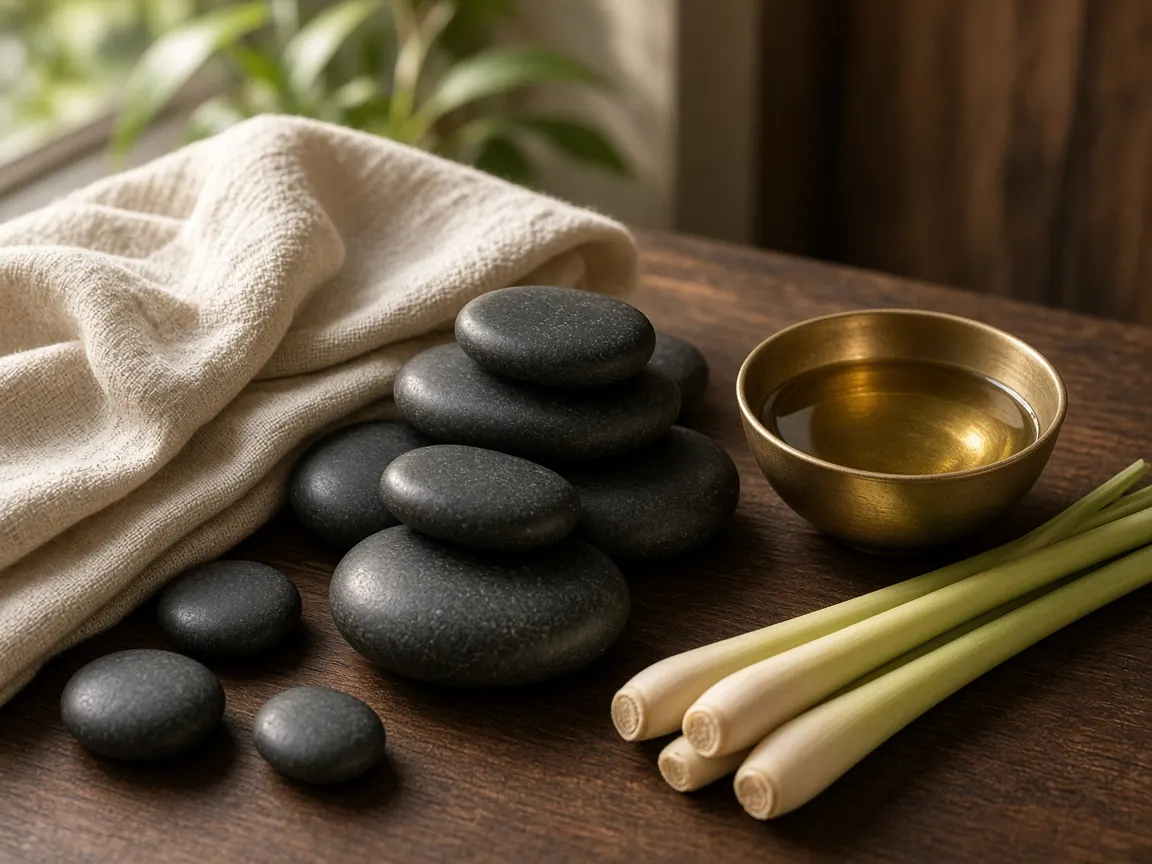
- Thai herbal compress (luk pra kob): warm muslin bundles of herbs pressed along the body, often added at the end of a session.
How to find a properly trained therapist
Thailand has excellent therapists, and also many who learned informally. A few questions separate them.
Ask about training. In Thailand, recognised Thai massage courses for practitioners generally start at 150 hours, and the strongest schools teach well beyond that. A therapist should be able to tell you where they studied.
Ask about registration. Professional practice is governed by Thai health law. Some therapists hold provider registration, and the most qualified hold a Thai Traditional Medicine licence. These are the credentials our therapist directory checks before anyone is listed, so you can see exactly what has been verified.
Notice the questions they ask you. A trained therapist screens you before they touch you. That is a sign of education, not caution.
Getting the most from your session
- Do not eat a heavy meal in the hour before. Deep abdominal work and twists are more comfortable on a light stomach.
- Drink water, but not a litre right before. Bangkok's heat will have you sipping anyway.
- Book longer rather than more often. A two-hour session lets the therapist complete the full sequence. Several rushed 30-minute sessions rarely do.
- Plan nothing urgent afterwards. The best time for a Thai massage is late afternoon, followed by a slow dinner and an early night.
- Consider having it at home. Many guests find in-villa massage more relaxing: no taxi afterward, just a shower and bed. Our wellness stays in Bangkok are chosen with space for exactly this.
When to skip it or adapt it
Traditional Thai massage involves firm pressure and strong stretches. Talk to your doctor first, and tell your therapist, if you are pregnant, have osteoporosis, a recent fracture or surgery, a blood clotting disorder, uncontrolled high blood pressure, or a heart condition. A gentle oil massage or foot massage may be a better fit, and a good therapist will happily adapt.
A ritual worth learning
The most generous thing about Thai massage is that it was never meant to stay behind temple walls. That is why it was carved in stone and why it is now protected as world heritage. Treat your first session as an introduction rather than a fix. Ask your therapist to name the stretches. Notice where you are tight. And when you go home, you will carry a little of Wat Pho with you.
When you are ready, browse verified therapists who can come to your residence, or read our guide to what to do about tipping a private therapist.