 Luxury Wellness Thailand
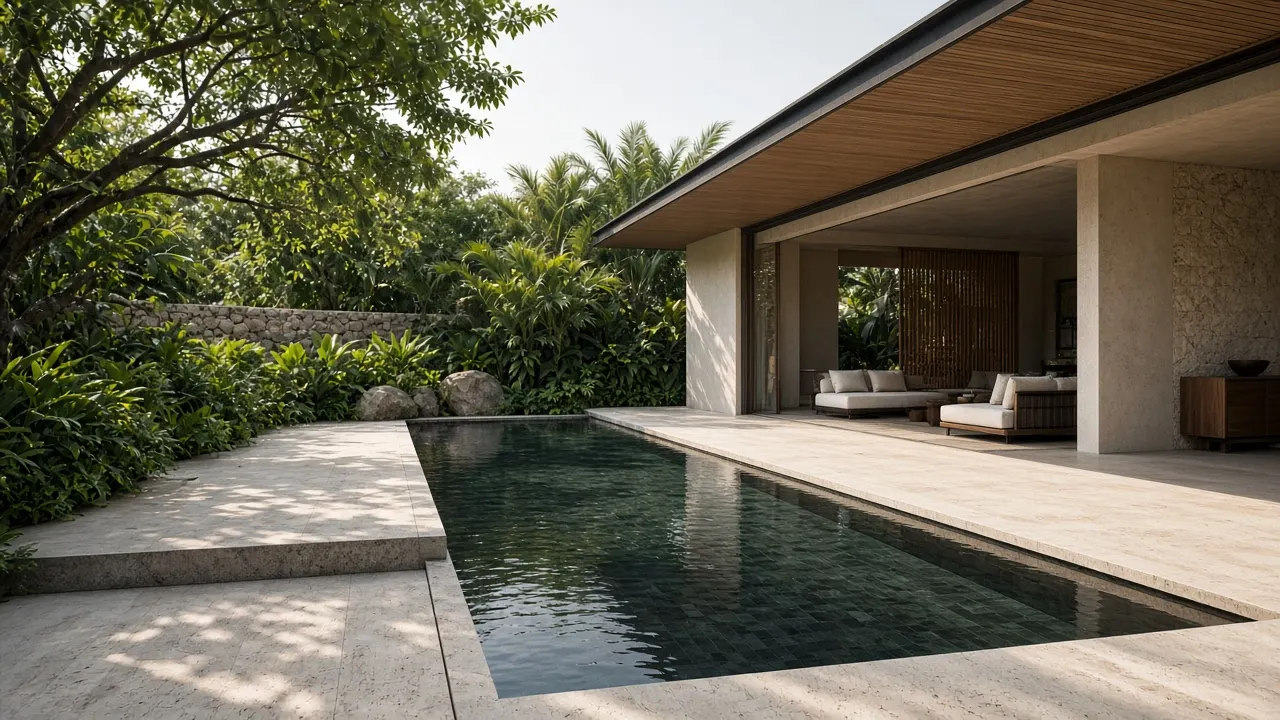
You have booked it. In an hour or so, a private massage therapist will knock on the door of your villa or residence in Bangkok, and you will not have to go anywhere afterwards. No taxi, no traffic, no stepping back out into the heat with your muscles still soft.
But if you have never had a massage at home before, a few small questions tend to appear. Where will it happen? What do I need to set up? What do I wear? Is this going to feel awkward in my own space?
It won't, if you know what to expect. This guide walks you through the whole experience, from the hour before your therapist arrives to the moment you drift off to sleep, so you can spend the session resting instead of wondering.
Before you book: choose the person, not just the slot
The most important decision happens before anyone arrives. A private therapist comes into your personal space, so their training matters even more than it does in a spa, where a manager and a reputation stand behind every treatment.
Our guide to choosing an independent massage therapist in Bangkok explains the Thai credentials worth asking about, including the 150-hour Thai Massage for Health certificate and service-provider registration, plus the questions that reveal real skill. Read it first. Once you have the right person, everything else on this page becomes easy.
When you book, share three things:
- What you want from the session. Deep relaxation, a stiff neck from the flight, sore legs after a long walk through the old city. Each one shapes the treatment.
- The style. Traditional Thai massage, oil massage, foot massage or a combination. If you can't decide, our guide to Thai massage in Bangkok explains how a traditional session feels.
- Any health concerns. More on this below. It is the one conversation you should never skip.
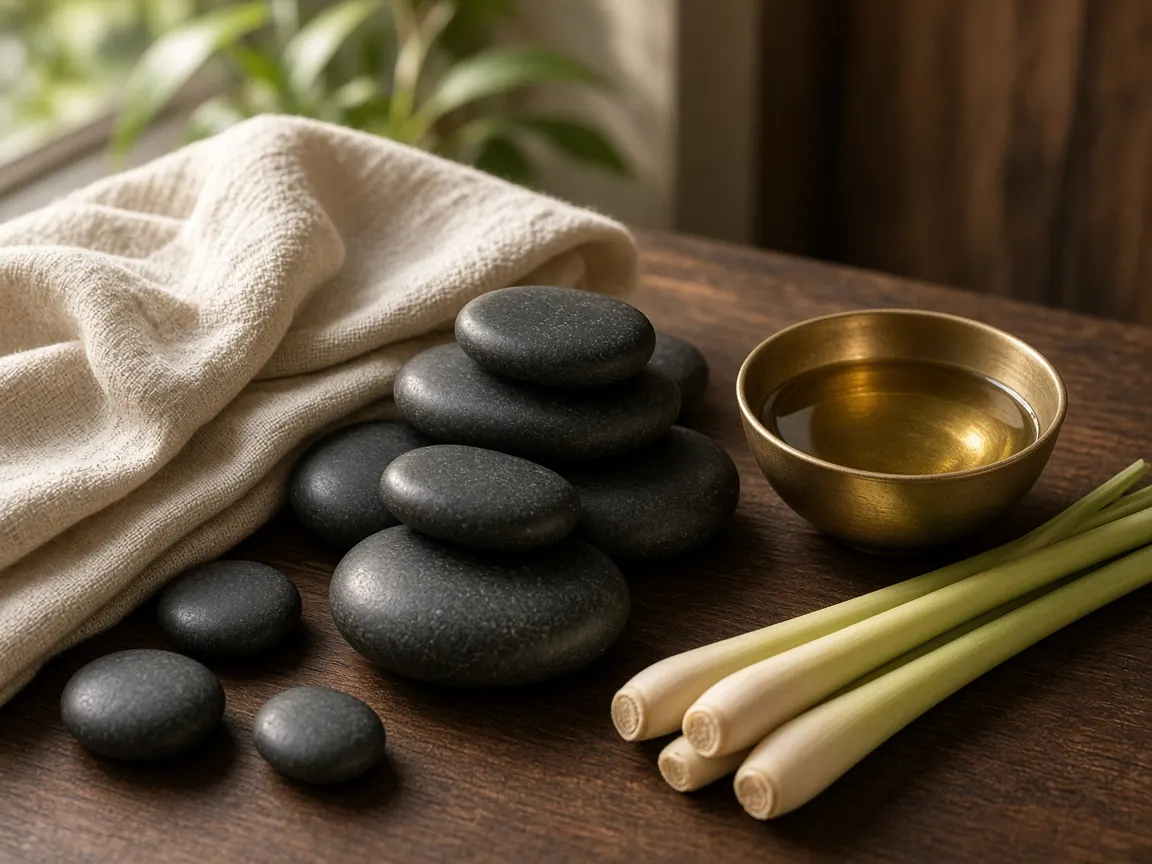
Ask the therapist what they bring. Some arrive with a mat, linens, oils and a change of loose clothing for you; others expect to use your bed or sofa cushions. Knowing in advance means you only need to clear a space.
The hour before: prepare the room
You don't need a spa. You need a quiet corner that feels calm. Here is a simple checklist.
- Space. For Thai massage, which is done on the floor, clear an area of roughly two by two and a half metres so the therapist can move around you. For an oil massage, a firm bed works well.
- Temperature. Set the air conditioning so the room feels comfortable rather than cold. You will be lying still for an hour or more, and your body cools down as you relax.
- Light. Dim the main lights or draw the curtains part way. Soft daylight or a single lamp is ideal.
- Sound. Choose quiet music, or nothing at all. Silence is underrated. In a 2006 study in the journal Heart, Luciano Bernardi and colleagues found that a two-minute pause of silence between music tracks lowered heart rate and blood pressure more than the slow, relaxing music that came before it.
- Phone. Put it on silent and leave it in another room.
- Practical things. A clean towel, a glass of water for you and one for your therapist, and a clear path to the shower.
Eat lightly, if at all, in the hour before. Lying face down on a full stomach is not pleasant, and some Thai massage stretches press gently on the abdomen.
When your therapist arrives
A good private therapist arrives on time, greets you calmly and spends a few minutes talking before touching anything. Expect questions such as:
- Where do you hold tension, and is anything painful right now?
- Have you had Thai massage before?
- Do you have any medical conditions, injuries or recent surgery?
- How strong do you like the pressure?
This is not small talk. It is the therapist working out how to treat you safely.
The health conversation
Be honest here, even if it feels like oversharing. Thai massage is generally well tolerated, but it is a strong, physical treatment. Writing in Ancient Science of Life in 2015, Viroj Wiwanitkit noted that Thai traditional massage can alter cardiac function and may be a problem for people with existing heart disease, and that rough massage carries a risk of injury.
The most serious risk is rare. In 2020, Sutham and colleagues reported in BMC Pregnancy and Childbirth the case of a pregnant woman with an undiagnosed blood clot in her leg who suffered a life-threatening pulmonary embolism shortly after a leg and foot massage. The authors warn that leg massage can dislodge a clot from a deep vein thrombosis.
So tell your therapist, and check with your doctor before booking, if you:
- are pregnant;
- have had a blood clot, or have a swollen, painful or warm calf;
- have had recent surgery, or leg pain after a long-haul flight;
- have a heart condition or high blood pressure;
- have osteoporosis, a recent fracture or a joint replacement;
- take blood thinners.
A skilled therapist will thank you and adapt the session. One who waves the information away is telling you something.
During the session
What to wear
For traditional Thai massage, you stay clothed. Wear loose, comfortable clothes, or the cotton top and trousers your therapist may bring. For oil massage, you undress to the level you are comfortable with and stay covered by a towel or sheet throughout, with only the area being worked on uncovered. You decide what feels right, and a professional therapist will follow your lead.
How it feels
A traditional session usually starts at the feet and moves slowly up the body, using palms, thumbs, elbows, knees and the therapist's body weight. There are assisted stretches that open the hips, back and shoulders. Good Thai massage has a slow, rocking rhythm. It can feel strong, but it should never feel like someone is grabbing or forcing you.
Three Thai words help:
- bao bao means softer;
- nak nak means firmer;
- jep means it hurts.
Use them freely. Sharp, burning or breath-holding pain is not the treatment working; it is a signal to ease off. The best therapists check in during the first few minutes and then let you sink into silence.
What is happening in your body
The calm you feel is measurable. A 2010 review of massage research by Albert Moraska and colleagues found that single sessions were consistently followed by short-term drops in heart rate and in salivary cortisol, a hormone linked to stress. Thai massage specifically has been studied too: in a 2011 study in the Journal of Bodywork and Movement Therapies, Buttagat and colleagues found that one session of traditional Thai massage reduced pain and muscle tension in people with back pain linked to trigger points, and shifted heart rate variability in a direction associated with relaxation.
This is the real advantage of a massage at home. That relaxed state does not get interrupted by a taxi ride. You can carry it straight into the rest of your evening.
How long to book, and how often
For pure relaxation, 60 to 90 minutes suits most people. Two hours is a luxury worth trying once, especially on your first evening after a long flight.
If you have a specific problem, think in terms of a series rather than a single session. A 2014 dosing trial led by Karen Sherman in the Annals of Family Medicine found that for chronic neck pain, 60-minute sessions two or three times a week were more likely to bring meaningful improvement than shorter or less frequent sessions. On a week-long stay, booking the same therapist every other evening is a sensible plan, and each session builds on the last because they already know your body.
For a sense of what sessions typically cost across the city, see what a Thai massage costs in Bangkok.
Afterwards: let the calm last
When the session ends, your therapist will usually leave you lying quietly for a moment. Don't jump up. Then:
- Sit up slowly. Your blood pressure may be a little lower than usual, so give yourself a minute before standing.
- Drink some water, and offer your therapist a glass too.
- Take a warm shower if you had an oil massage, or simply change into something comfortable.
- Settle up calmly. If you are unsure about gratuities, our guide on tipping a private massage therapist in Thailand answers the question without fuss.
Then protect the evening. Keep dinner light. Skip coffee late in the day: in a 2013 study in the Journal of Clinical Sleep Medicine, Christopher Drake and colleagues found that caffeine taken even six hours before bed reduced total sleep by more than an hour. And keep your bedroom cool. A 2012 review by Kazue Okamoto-Mizuno and Koh Mizuno found that heat and humidity increase wakefulness and reduce deep and REM sleep, which matters in Bangkok's climate. Our sleep guide has more ideas for turning a good massage into a good night.
Etiquette in your own home
A few small courtesies make the experience better for both of you:
- Be ready on time. Your therapist may have another appointment across the city, and Bangkok traffic is unpredictable.
- Keep the space private. Let others in your group know a session is underway so the room stays quiet.
- Keep it professional. A private massage is a therapeutic treatment with clear boundaries, exactly as it would be in a spa.
- Respect the craft. In 2019 UNESCO inscribed Nuad Thai, traditional Thai massage, on its Representative List of the Intangible Cultural Heritage of Humanity. The therapist in your room is carrying on a tradition passed from teacher to student over generations.
The simplest way to book
You can find, check and brief a private therapist yourself. Or you can let someone do the checking first.
Every therapist in our directory of verified therapists shows a badge for the credential we have seen and checked ourselves. Our concierge confirms availability with the therapist before anything is booked, so all you need to do is clear a little floor space and dim the lights.
If you are still deciding where to stay, our Bangkok wellness villas are chosen with in-residence treatments in mind. Find a quiet room, book a trusted pair of hands, and let the evening come to you.